Floriculture Projects
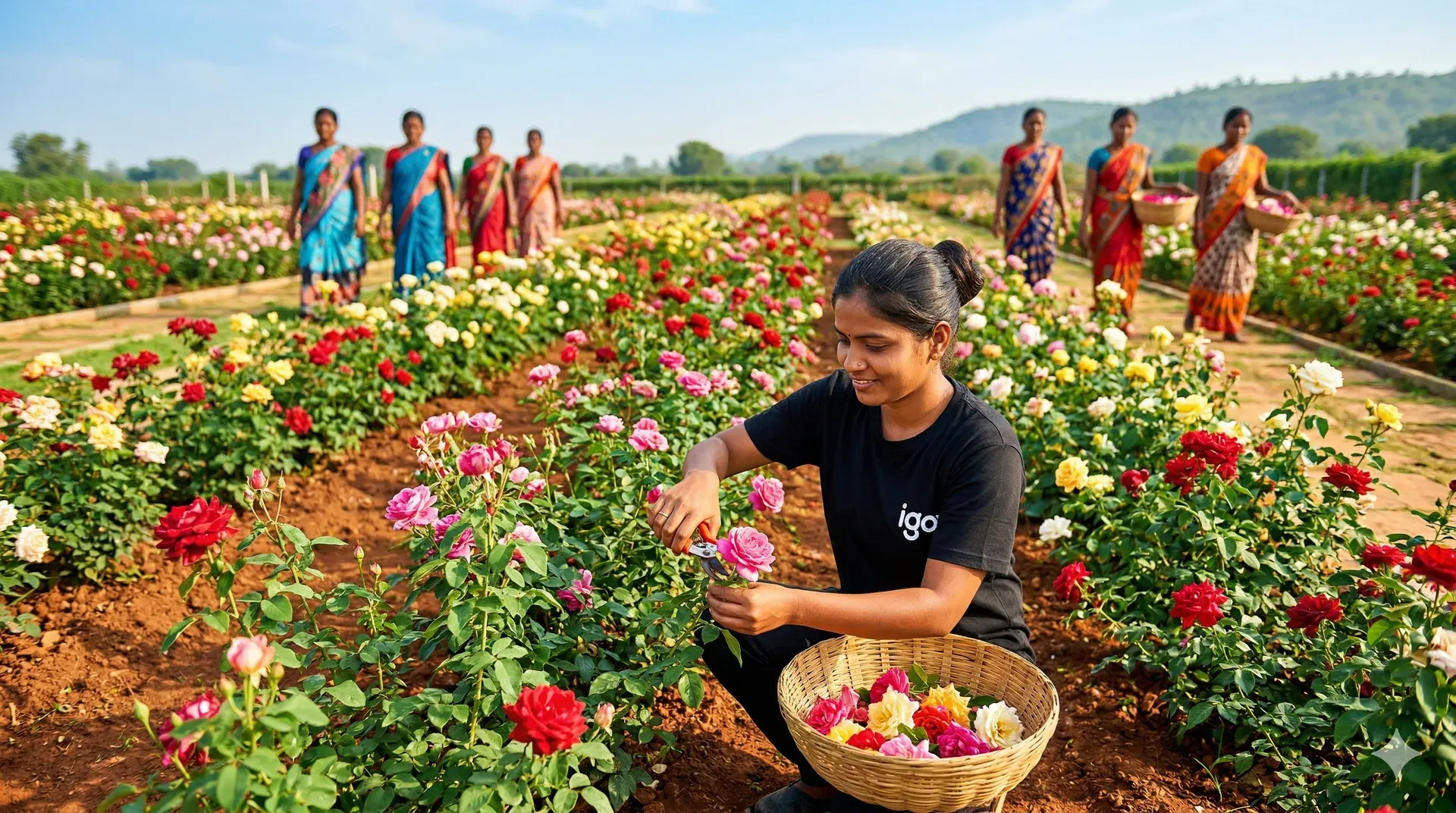
Rose Farming
Our team handles complete civil structure, growing media, irrigation, crop protocol training, and ongoing AMC — delivered turnkey at your farm gate.
- Polyhouse cultivation of Dutch Rose varieties for premium cut flower market
- Drip irrigation with fertigation for continuous bloom cycles
- 12 months × 4–5 harvests per year production cycle
- Cold chain support for export-grade flower quality
- Subsidy available under NHM for protected floriculture
Site Survey
Comprehensive land assessment, soil or water analysis, and engineering feasibility report.
Turnkey Setup
End-to-end installation by expert teams using institutional-grade, certified materials.
Training
Hands-on operational training covering system management, crop protocol, and troubleshooting.
AMC Support
Annual maintenance contracts ensuring long-term performance, yield consistency and uptime.
Our Workflow
Professional
Turnkey Workflow
Technical Feasibility
Rigorous site assessment and precision engineering design tailored to your land, climate, and budget.
Expert Installation
Professional on-site execution using certified materials, precision equipment, and our trained field teams.
Handover & Training
Comprehensive handover documentation, operational training, and long-term AMC support for sustained performance.
Guaranteed structural integrity — institutional grade, 10+ years lifespan
IGO Advantage
15,000+
Projects Delivered
Market Focus
ROI First
Every project designed for maximum commercial viability
Scalable from pilot units to full commercial enterprise
More from Floriculture Projects
Related Projects
In-Depth Guide
Rose Farming in India: Growing Premium Cut Flowers for High-Value Markets
A rose grown for a garden and a rose grown for the commercial cut-flower market are not necessarily managed in the same way.
Commercial buyers look beyond the beauty of the flower. Stem length, straightness, bud size, colour, freshness, uniformity and vase life can all influence market acceptance.
This makes rose farming in India a precision-oriented floriculture business where quality matters at every stage—from selecting the variety and designing the polyhouse to harvesting, grading and maintaining freshness after cutting.
For growers targeting premium flower markets, the objective is not simply to produce more roses. It is to produce consistent, market-ready stems throughout the production period.
Why Commercial Roses Need Protected Cultivation
Weather can directly influence flower quality.
Heavy rain, strong wind, excessive heat and changing humidity can affect plant development and the appearance of flowers. When buyers expect uniform cut roses, uncontrolled environmental conditions can make consistent production more difficult.
IGO Agritech Farms therefore focuses on polyhouse cultivation of Dutch Rose varieties for the premium cut-flower market.
Protected cultivation provides a more manageable growing environment and allows the farm team to organize irrigation, nutrition and crop operations systematically.
The structure itself, however, is only the beginning. Successful rose cultivation depends on how well the growing environment is managed inside it.
Start with the Market, Then Select the Rose
Commercial rose farming should begin with a simple question:
Who is going to buy the flowers?
Different markets may prefer different colours, stem lengths, bud sizes and packaging formats.
Dutch Roses are widely associated with premium cut-flower production and can be cultivated under protected conditions for organized commercial supply.
Before establishing the project, growers should study potential demand from florists, flower wholesalers, event businesses, hotels, retailers and other institutional buyers.
Variety selection can then be aligned with the requirements of the intended market rather than choosing plants only according to personal preference.
Stem Quality Is a Commercial Product
In cut-flower farming, the flower is only one part of the final product.
The stem matters too.
A premium commercial rose generally needs to be harvested with suitable stem length, strength and overall appearance according to buyer specifications.
This means crop management should support balanced vegetative growth as well as flower development.
Farm teams need to observe plant structure, shoots, leaves, stems and buds throughout the production period.
The commercial goal is consistency.
If a buyer requires a particular grade, the farm should aim to produce as many stems as possible within that specification.
Continuous Blooms Need Continuous Management
IGO's Rose Farming page describes a 12-month production system with approximately 4–5 harvests per year.
Repeated production requires disciplined crop management.
After one harvesting period, the plants need to remain healthy enough to support subsequent flowering cycles. Irrigation, nutrition, pruning, crop protection and general plant maintenance therefore need to follow a planned programme.
Farm records can help teams track crop operations and compare performance across different bloom cycles.
Commercial rose farming should be treated as an ongoing production system rather than a single flowering event.
Drip Fertigation Supports Precision Management
Water and nutrition directly influence plant development and flower production.
IGO's rose cultivation model uses drip irrigation with fertigation for continuous bloom cycles.
Drip irrigation helps deliver water closer to the root zone, while fertigation allows nutrients to be supplied through the irrigation system according to crop requirements.
Schedules should consider plant stage, environmental conditions, growing media or soil characteristics and crop observations.
The objective is not excessive input application.
Instead, water and nutrients should be managed carefully to support healthy plants and consistent commercial flower production.
Flower Quality Requires Daily Observation
Rose plants need regular monitoring throughout the production cycle.
Farm teams should inspect the crop for changes in leaf appearance, shoot development, bud formation and overall plant health.
Pest and disease management is particularly important because visible damage can reduce the commercial grade of cut flowers.
The protected environment also needs routine attention.
Irrigation lines, fertigation equipment, ventilation and other infrastructure should be checked regularly to ensure the system continues operating as designed.
In premium floriculture, small quality problems can become commercial problems if they affect a large number of stems.
Harvest at the Correct Flower Stage
Cut roses need to reach the buyer in an attractive condition with useful vase life remaining.
Harvest timing therefore becomes an important quality decision.
Flowers should be cut at an appropriate stage according to the selected variety, intended market and transportation time.
Harvesting too early or too late can affect presentation and buyer acceptance.
Workers should also handle stems carefully during cutting and collection to reduce unnecessary physical damage.
Once harvested, flowers should move efficiently into post-harvest handling rather than remaining exposed in unsuitable field conditions.
Grading Turns Flowers into Marketable Products
Not every harvested rose will necessarily belong to the same commercial grade.
After harvesting, stems can be sorted according to buyer specifications.
Commercial grading may consider characteristics such as:
Stem Length → Stem Strength → Bud Development → Colour → Uniformity → Overall Appearance
Flowers can then be grouped and prepared for packing.
This stage is important because buyers often purchase according to grade rather than simply ordering “roses.”
A well-managed grading process creates more consistent batches and makes it easier to supply different market segments.
The Cold Chain Protects What the Farm Produced
One of the biggest differences between floriculture and many field crops is the importance of freshness immediately after harvest.
A rose begins losing commercial freshness once it is cut.
That makes post-harvest temperature management important, particularly when flowers need to travel longer distances or enter premium supply chains.
IGO's Rose Farming project includes cold-chain support for export-grade flower quality.
An organized commercial chain may include:
Harvest → Grading → Bunching → Cooling → Packing → Transportation → Buyer
Good post-harvest management helps protect the quality created inside the polyhouse.
Without it, even excellent flowers can lose market value before reaching the customer.
Build Production Around the Flower Market
Rose demand can come from several market segments.
Wedding and event businesses require decorative flowers. Florists need fresh stems for bouquets and arrangements. Hotels and hospitality businesses use flowers for décor, while retailers and wholesalers serve everyday consumer demand.
Seasonal occasions can also create periods of stronger demand.
Commercial growers should therefore understand their local and regional flower markets before planning production volumes.
The farm should know the preferred colours, grades, stem lengths, quantities and delivery schedules of potential buyers.
Production becomes stronger when cultivation planning and market planning happen together.
Subsidy Support for Protected Floriculture
Protected floriculture projects may be eligible for government assistance under applicable horticulture programmes.
IGO's Rose Farming page states that subsidy is available under NHM for protected floriculture.
Actual eligibility, subsidy percentage, documentation and approval will depend on current government guidelines, project specifications, location and applicant category.
Growers should therefore verify the applicable scheme and requirements before making project decisions.
Developing a Rose Farming Project with IGO
IGO Agritech Farms provides turnkey support for commercial rose farming projects in India.
Project development starts with site assessment, including land evaluation, soil or water analysis and engineering feasibility.
IGO's project delivery covers the civil structure, growing media, irrigation, crop protocol training and ongoing AMC support.
The process includes technical feasibility, professional installation, handover and operational training so that infrastructure and crop management can be planned as one complete floriculture system.
Grow Flowers That Meet a Grade
Commercial rose farming is not simply about producing beautiful flowers.
It is about producing flowers that consistently meet a market specification.
Polyhouse conditions, Dutch Rose varieties, drip fertigation, crop monitoring, harvesting, grading and cold-chain management all contribute to the quality of the final stem.
For growers considering commercial rose farming in India, the strongest strategy is to identify the target flower market first and develop the production system around its quality requirements.
When every stage is planned—from the plant inside the polyhouse to the flower reaching the buyer—the farm is better positioned to supply premium cut flowers consistently.
Planning a Rose Farming Project? IGO Agritech Farms provides support for site assessment, polyhouse development, irrigation and fertigation, crop protocol training, cold-chain planning and ongoing technical assistance for commercial floriculture projects.
Next Step
Ready to start your
Rose Farming project?
Get a free site assessment, detailed project report, and cost estimate from IGO's engineering team.