Nursery Projects
Commercial Plant Nursery
Our team handles complete civil structure, growing media, irrigation, crop protocol training, and ongoing AMC — delivered turnkey at your farm gate.
- Mother plant block, propagation unit & hardening zone designed
- Shade net houses (50% shade) for seedling production
- Drip & mist irrigation with fertigation system
- Production capacity from 50,000 to 5,000,000 seedlings/year
- Subsidy available under NHM for commercial nursery units
Site Survey
Comprehensive land assessment, soil or water analysis, and engineering feasibility report.
Turnkey Setup
End-to-end installation by expert teams using institutional-grade, certified materials.
Training
Hands-on operational training covering system management, crop protocol, and troubleshooting.
AMC Support
Annual maintenance contracts ensuring long-term performance, yield consistency and uptime.
Our Workflow
Professional
Turnkey Workflow
Technical Feasibility
Rigorous site assessment and precision engineering design tailored to your land, climate, and budget.
Expert Installation
Professional on-site execution using certified materials, precision equipment, and our trained field teams.
Handover & Training
Comprehensive handover documentation, operational training, and long-term AMC support for sustained performance.
Guaranteed structural integrity — institutional grade, 10+ years lifespan
IGO Advantage
15,000+
Projects Delivered
Market Focus
ROI First
Every project designed for maximum commercial viability
Scalable from pilot units to full commercial enterprise
More from Nursery Projects
Related Projects
In-Depth Guide
Commercial Plant Nursery in India: Building a Professional Seedling Production Pipeline
Every productive farm begins before the crop reaches the field.
It begins with the plant.
Healthy, uniform and properly established seedlings give growers a stronger starting point for commercial cultivation. This creates an important opportunity for professionally managed nurseries that can produce planting material consistently and at scale.
A commercial plant nursery in India is therefore more than a place where plants are kept until someone buys them. It is a production facility where mother plants, propagation, irrigation, nutrition, hardening, grading and dispatch need to work as one system.
The objective is simple: produce the right seedlings, at the right quality, in the required quantity, at the right time.
Think in Seedling Stages
A professional nursery should be designed around how a plant moves through production.
Instead of treating the entire nursery as one growing area, different stages can have dedicated zones.
A typical production flow may look like:
Mother Plant → Propagation → Seedling Development → Hardening → Grading → Dispatch
IGO Agritech Farms designs commercial nurseries with a mother plant block, propagation unit and hardening zone.
Separating these functions helps create a more organized production process and allows nursery teams to manage plants according to their development stage.
The Mother Plant Block Starts the System
For crops propagated from selected mother stock, the quality of the production process begins with the source plants.
A mother plant block provides a dedicated area for maintaining selected plants used for propagation.
These plants require regular observation and proper crop management because their condition can influence the quality of future planting material.
Mother plants should also be clearly identified and organized according to variety or crop type.
A commercial nursery should treat its mother stock as production infrastructure rather than simply another collection of plants.
Propagation Needs Its Own Environment
Young seedlings and newly propagated plants are more sensitive than established plants.
This is why the propagation stage requires careful management.
The propagation unit should provide an environment suited to early plant development, with appropriate growing media, moisture, irrigation and protection.
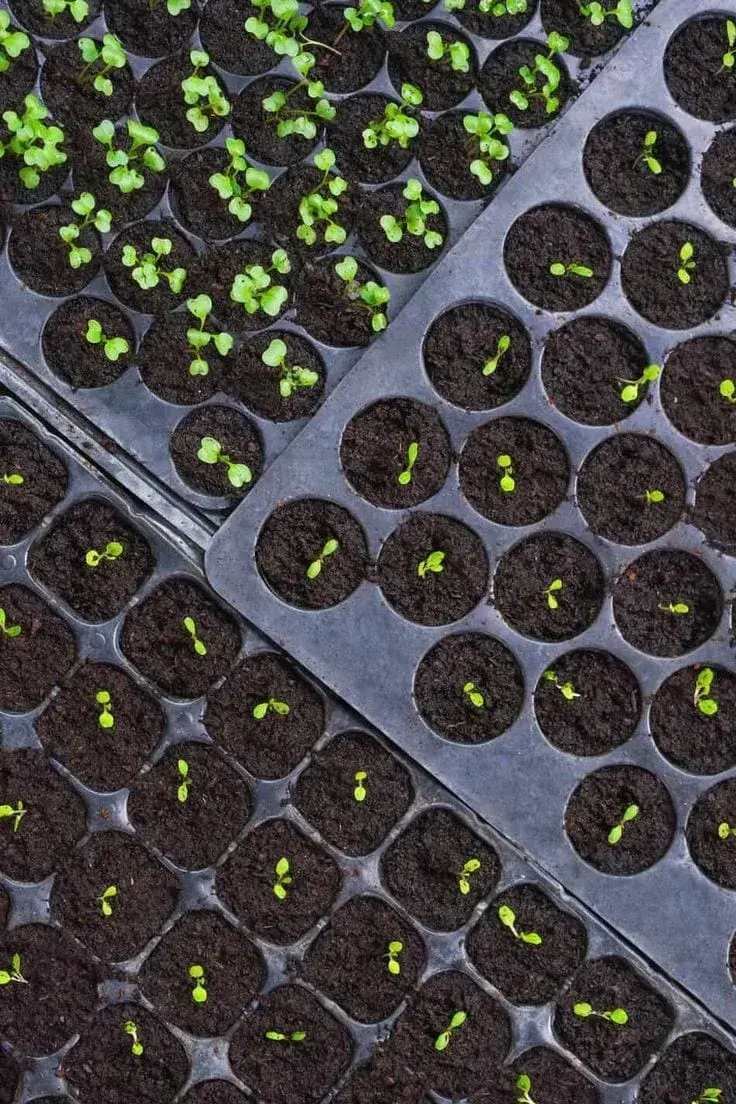
Seed trays, containers or other propagation systems can be organized according to the crops being produced.
Batch identification is also important.
When thousands of seedlings are moving through a nursery, operators should know when each batch was started, which variety it contains and when it is expected to move to the next stage.
Shade-Net Houses Protect Young Plants
IGO's Commercial Plant Nursery model includes shade-net houses with 50% shade for seedling production.
Shade-net structures can help create a more suitable growing environment for nursery plants by reducing excessive solar exposure while maintaining ventilation.
The structure should be planned according to the nursery layout and production requirements.
Inside the shade-net house, trays and plants should be arranged so workers can inspect, irrigate, manage and move seedlings efficiently.
A good structure should support operations rather than simply cover the plants.
Mist Irrigation Supports Early Plant Development
Water management changes according to plant stage.
Very young seedlings and propagation material can require a different irrigation approach from larger nursery plants.
IGO's nursery system combines drip and mist irrigation with fertigation.
Mist systems can support appropriate moisture management in propagation and young-seedling areas, while drip irrigation can be used where direct root-zone watering is more suitable.
The irrigation system should therefore follow the nursery zones.
Watering everything in exactly the same way can reduce the level of control needed in professional seedling production.
Fertigation Makes Nutrition More Systematic
As nursery production expands, applying nutrition manually to thousands of individual plants becomes difficult.
A properly designed fertigation system can help deliver nutrients through irrigation according to crop protocols.
However, seedlings at different stages may have different requirements.
Nutrition should therefore be managed according to crop type, growth stage and growing system rather than using one programme across the entire nursery.
Operators should also monitor plant appearance and root development to identify whether management adjustments are required.
Hardening Prepares Plants for the Farm
One of the most important nursery stages happens just before dispatch.
Seedlings grown in protected nursery conditions will eventually face a different environment after transplanting.
The hardening zone helps prepare plants for this transition.
During hardening, management practices are adjusted according to the crop protocol so seedlings become better prepared for field or production conditions.
Skipping this stage can create unnecessary stress after transplanting.
A professional nursery therefore does not consider a seedling finished simply because it has reached a certain size.
It needs to be ready for its next environment.
Uniformity Is a Commercial Product
Commercial farmers usually do not want a batch containing some strong seedlings, some weak seedlings and some plants at completely different development stages.
They need consistency.
Nursery teams should therefore monitor batches for uniform growth and remove plants that do not meet the required standard.
Before dispatch, seedlings can be graded according to suitable quality parameters for the crop.
Uniform planting material makes field establishment easier and helps farmers manage subsequent crop operations more consistently.
For a commercial nursery, quality is not only about keeping plants alive.
Uniformity itself becomes part of the product.
Production Capacity Needs Planning
IGO states that its commercial nursery systems can be designed for approximately 50,000 to 5,000,000 seedlings per year.
But production capacity should not be selected simply by choosing the largest possible number.
Nursery size needs to match expected demand.
A facility producing seedlings for local farmers may require one capacity, while a nursery serving large agricultural projects, institutions or wider distribution networks may need another.
Production planning should consider crop mix, propagation duration, seasonal demand, available space, labour and buyer requirements.
Schedule Production Backward from Planting Dates
Seedlings have a market window.
Farmers generally require planting material when their fields or protected cultivation projects are ready for transplantation.
This means nursery production should be linked to the customer's crop calendar.
If buyers need seedlings during a particular planting period, propagation should begin early enough for the plants to complete development and hardening before dispatch.
The commercial sequence becomes:
Buyer Requirement → Planting Date → Dispatch Date → Hardening → Propagation Schedule
This backward-planning approach can reduce the risk of producing large quantities of seedlings without a clear delivery window.
Keep Batch Records
Large nursery operations benefit from traceability.
Each production batch can be recorded with information such as variety, propagation date, quantity, growing zone, expected hardening date and planned dispatch.
Records help teams understand where different batches are located and what operations are due next.
They also provide useful production history.
Over time, nursery managers can compare batches and improve scheduling based on actual performance.
Develop the Market Before Increasing Capacity
Commercial nurseries can serve several buyer categories.
These may include individual farmers, commercial farms, protected cultivation projects, landscaping businesses, institutions and other agricultural enterprises.
Different buyers may require different plant varieties, quantities and delivery schedules.
Before expanding nursery capacity, operators should identify where the additional seedlings will go.
A nursery capable of producing millions of seedlings still requires an equally organized sales and distribution network.
Production and market development should therefore grow together.
Developing a Commercial Plant Nursery with IGO
IGO Agritech Farms provides turnkey support for commercial plant nursery projects in India.
The project process begins with site assessment, including land conditions, soil or water analysis and engineering feasibility.
Depending on the project requirements, execution can include nursery structures, mother plant blocks, propagation units, hardening zones, growing media, drip and mist irrigation, fertigation and related infrastructure.
IGO also provides crop protocol training, operational handover and ongoing AMC support.
Commercial nursery projects may also be eligible for applicable government support schemes, subject to current programme guidelines, project specifications and approval requirements.
Build a Pipeline, Not Just a Nursery
A successful nursery is defined by movement.
Mother plants provide propagation material. Propagation creates new plants. Young seedlings develop under suitable conditions. Hardening prepares them for transplantation. Grading protects quality, and dispatch connects the nursery to the farm.
For entrepreneurs planning a commercial plant nursery in India, the goal should therefore go beyond producing large numbers of plants.
Build a reliable seedling pipeline.
When infrastructure, irrigation, crop protocols, scheduling and market demand work together, a nursery can become an organized production centre capable of supplying consistent planting material throughout its operating calendar.
Planning a Commercial Plant Nursery? IGO Agritech Farms provides support for site assessment, nursery structures, mother plant blocks, propagation and hardening zones, irrigation, fertigation, crop protocol training and ongoing technical assistance.
Next Step
Ready to start your
Commercial Plant Nursery project?
Get a free site assessment, detailed project report, and cost estimate from IGO's engineering team.