Nursery Projects
Tissue Culture Plant Nursery
Our team handles complete civil structure, growing media, irrigation, crop protocol training, and ongoing AMC — delivered turnkey at your farm gate.
- Laminar flow hood, autoclave & culture room infrastructure setup
- Compatible with banana, sugarcane, orchid, teak & cardamom TC plants
- ISO-grade cleanliness protocols & contamination control systems
- From lab design to establishment, training & protocol support
- NCBI/DST approved lab setup assistance available
Site Survey
Comprehensive land assessment, soil or water analysis, and engineering feasibility report.
Turnkey Setup
End-to-end installation by expert teams using institutional-grade, certified materials.
Training
Hands-on operational training covering system management, crop protocol, and troubleshooting.
AMC Support
Annual maintenance contracts ensuring long-term performance, yield consistency and uptime.
Our Workflow
Professional
Turnkey Workflow
Technical Feasibility
Rigorous site assessment and precision engineering design tailored to your land, climate, and budget.
Expert Installation
Professional on-site execution using certified materials, precision equipment, and our trained field teams.
Handover & Training
Comprehensive handover documentation, operational training, and long-term AMC support for sustained performance.
Guaranteed structural integrity — institutional grade, 10+ years lifespan
IGO Advantage
15,000+
Projects Delivered
Market Focus
ROI First
Every project designed for maximum commercial viability
Scalable from pilot units to full commercial enterprise
More from Nursery Projects
Related Projects
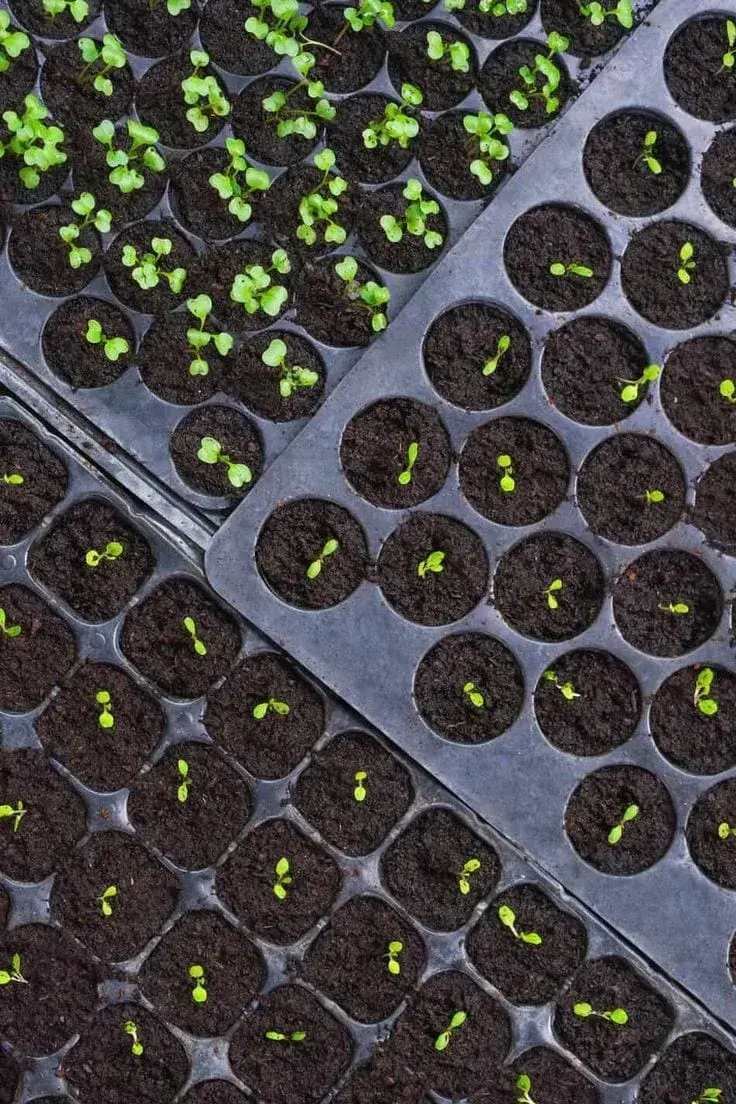
In-Depth Guide
Tissue Culture Plant Nursery in India: Producing Uniform Plants Through Controlled Propagation
Producing thousands of planting materials with consistent characteristics can be difficult when conventional propagation methods are used.
Tissue culture offers a different approach.
Instead of beginning entirely in a field nursery, plant multiplication starts inside a controlled laboratory environment. Small quantities of selected plant material can be propagated under carefully managed conditions before the young plants move through acclimatization and nursery stages.
This makes a tissue culture plant nursery in India an important specialized system for crops where uniform, large-scale planting material is required.
But tissue culture is not simply about multiplying plants quickly. The real challenge is maintaining cleanliness, consistency and plant quality throughout the process.
Tissue Culture Begins in the Laboratory
A normal nursery begins with seeds, cuttings or other planting material.
Tissue culture begins with selected plant tissue handled under controlled laboratory conditions.
The process requires specialized infrastructure because the plant material is highly sensitive during its early development.
A commercial setup therefore needs defined working areas, suitable equipment and operating procedures.
IGO Agritech Farms provides support from laboratory design and infrastructure establishment to training and protocol implementation.
The objective is to create a controlled production environment rather than treating tissue culture like conventional nursery propagation.
Why Cleanliness Is Central to the System
One of the biggest challenges in tissue culture is contamination.
Because plant material is handled in a controlled nutrient environment, unwanted microorganisms can interfere with the culture and affect production.
IGO's tissue culture model therefore incorporates ISO-grade cleanliness protocols and contamination-control systems.
Cleanliness must extend beyond one piece of equipment.
Work surfaces, tools, containers, laboratory practices and movement inside the production area all need suitable procedures.
A tissue culture facility should essentially be designed around preventing unnecessary contamination at every stage.
Laminar Flow Hoods Create a Controlled Work Area
IGO includes laminar flow hood infrastructure within its Tissue Culture Plant Nursery setup.
A laminar flow hood provides a controlled workspace for sensitive laboratory operations.
Its purpose is to help reduce exposure to contaminants while plant material is being handled.
However, the equipment alone cannot guarantee successful production.
Operators need appropriate training and must follow defined procedures while working within the controlled area.
This combination of equipment and disciplined operating practice is fundamental to commercial tissue culture production.
Sterilization Is Part of Daily Production
IGO's project page also specifies autoclave infrastructure.
Sterilization is an essential part of tissue culture operations because tools, vessels and relevant materials need appropriate treatment before they are used in sensitive production processes.
An autoclave forms part of this contamination-management system.
The sterilization workflow should be organized so that treated materials remain properly handled after the process.
This highlights an important point about tissue culture:
Success depends not on one machine, but on how every laboratory process connects with the next.
Culture Rooms Need Environmental Management
After plant material has been established under controlled conditions, cultures require a suitable environment for further development.
This is where the culture room becomes important.
Lighting, temperature and other environmental parameters need to follow the plant-production protocol.
Cultures also need systematic identification and monitoring.
A commercial laboratory may contain large numbers of culture vessels at different stages, making organization essential.
Clear batch identification can help operators track the crop, variety, production stage and relevant dates.
Different Crops Create Different Opportunities
IGO's Tissue Culture Plant Nursery system is compatible with banana, sugarcane, orchid, teak and cardamom tissue-culture plants.
These crops represent very different commercial applications.
Banana tissue culture can support large-scale orchard establishment where growers require uniform planting material.
Sugarcane can create another agricultural application.
Orchids connect tissue culture with commercial floriculture, while teak can relate to forestry planting material.
Cardamom adds a high-value spice crop to the potential production mix.
A tissue culture facility should therefore be designed around its intended crop programme rather than attempting to produce every possible species.
Multiplication Is Only Part of the Journey
Producing plantlets inside a laboratory does not mean they are immediately ready for field planting.
Plants developed under controlled laboratory conditions need to transition gradually toward external growing environments.
This makes acclimatization one of the most important links between laboratory production and nursery production.
The plants need to move through suitable stages where they can adapt progressively to changing environmental conditions.
This transition must follow the crop-specific protocol.
Losing control at this stage can reduce the value created during earlier laboratory multiplication.
The Nursery Completes the Production System
A tissue culture project therefore has two connected worlds:
Laboratory Production → Nursery Acclimatization
The laboratory focuses on controlled propagation.
The nursery prepares plants for the conditions they will eventually experience outside the laboratory.
Growing media, irrigation, environmental management and plant monitoring become increasingly important during this stage.
Plants can then progress toward stronger nursery development before final grading and dispatch.
A successful tissue culture enterprise needs both parts of the system to perform consistently.
Uniformity Creates Commercial Value
One of the major reasons for using tissue culture is the ability to produce large numbers of plants through controlled propagation.
For commercial buyers, consistency is important.
Farmers establishing larger plantations generally need planting material that can be managed as a reasonably uniform crop.
Plant size, development stage and overall quality should therefore be assessed before dispatch.
Tissue culture production should not focus only on how many plantlets can be multiplied.
The final objective is to produce usable, uniform planting material that can successfully move into the customer's cultivation system.
Trace Every Production Batch
Commercial tissue culture benefits greatly from traceability.
Each batch can be associated with information such as:
Crop → Variety → Source Material → Culture Date → Multiplication Stage → Acclimatization → Nursery Batch → Dispatch
This creates a production history.
If a problem appears during a later stage, operators can review earlier records and identify where corrective action may be needed.
Traceability also becomes increasingly valuable as the number of batches and customers grows.
A professional tissue culture operation should therefore combine biological production with disciplined record management.
Skilled People Matter as Much as Equipment
A tissue culture laboratory can contain advanced equipment and still perform poorly if operating procedures are inconsistent.
Technicians need to understand laboratory hygiene, sterilization, culture handling, environmental management and production protocols.
Nursery teams also need training for acclimatization and subsequent plant management.
This is why IGO's project model includes operational training and protocol support.
Technology creates the production environment.
Trained people make that environment work.
Scale Should Follow the Production System
IGO states that its tissue culture projects can scale from pilot units to full commercial enterprises.
However, increasing laboratory capacity also increases the requirements for equipment, skilled personnel, nursery space, quality control and market demand.
Scaling should therefore happen as a coordinated process.
There is little value in producing more laboratory plantlets than the acclimatization facility can handle.
Similarly, nursery capacity should be aligned with confirmed or expected buyer requirements.
Every stage needs sufficient capacity for the stage before it.
Developing a Tissue Culture Plant Nursery with IGO
IGO Agritech Farms provides turnkey support for tissue culture plant nursery projects in India.
The company's current project scope includes laminar flow hoods, autoclaves, culture-room infrastructure, cleanliness and contamination-control systems, along with support for laboratory design, establishment, training and production protocols.
The system can be developed for crops including banana, sugarcane, orchid, teak and cardamom.
IGO also provides site assessment, engineering feasibility, professional installation, operational training and ongoing AMC support.
From Plant Tissue to Plantation
Tissue culture production is a chain.
Selected plant material enters a controlled laboratory. Clean working procedures protect the culture. Multiplication increases plant numbers. Culture rooms support development. Acclimatization prepares young plants for less controlled conditions, and nursery management prepares them for commercial planting.
Every stage protects the value created in the previous one.
For businesses considering a tissue culture plant nursery in India, the goal should therefore not be simply to produce the highest possible number of plantlets.
The goal is to create a reliable system that can repeatedly deliver clean, uniform and properly acclimatized planting material.
That is where laboratory precision becomes agricultural value.
Planning a Tissue Culture Plant Nursery? IGO Agritech Farms provides support for laboratory design, laminar flow and autoclave infrastructure, culture rooms, contamination-control systems, nursery establishment, training, crop protocols and ongoing technical assistance.
Next Step
Ready to start your
Tissue Culture Plant Nursery project?
Get a free site assessment, detailed project report, and cost estimate from IGO's engineering team.