Farm Infrastructure Projects
Pack House
We manage civil and structural engineering, certified material procurement, on-site precision execution, and commissioning with full documentation.
- Grading, sorting, washing & packing line infrastructure design
- APEDA & GlobalG.A.P. compliant facility layout
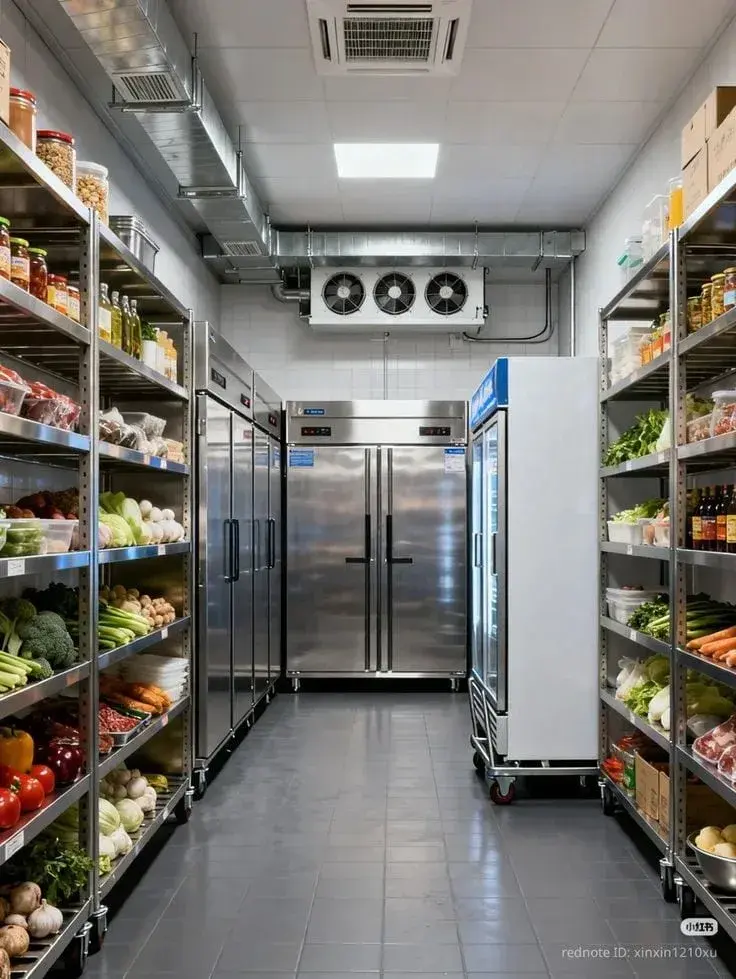
- Pre-cooling & cold room integration for post-harvest quality
- Covered area design as per crop type and throughput requirement
- Subsidy under PMKSY, NHM & state post-harvest development schemes
Site Survey
Comprehensive land assessment, soil or water analysis, and engineering feasibility report.
Turnkey Setup
End-to-end installation by expert teams using institutional-grade, certified materials.
Training
Hands-on operational training covering system management, crop protocol, and troubleshooting.
AMC Support
Annual maintenance contracts ensuring long-term performance, yield consistency and uptime.
Our Workflow
Professional
Turnkey Workflow
Technical Feasibility
Rigorous site assessment and precision engineering design tailored to your land, climate, and budget.
Expert Installation
Professional on-site execution using certified materials, precision equipment, and our trained field teams.
Handover & Training
Comprehensive handover documentation, operational training, and long-term AMC support for sustained performance.
Guaranteed structural integrity — institutional grade, 10+ years lifespan
IGO Advantage
15,000+
Projects Delivered
Market Focus
ROI First
Every project designed for maximum commercial viability
Scalable from pilot units to full commercial enterprise
More from Farm Infrastructure Projects
Related Projects
In-Depth Guide
Pack House Project in India: Turning Fresh Harvest into Market-Ready Produce
A crop may leave the farm freshly harvested, but that does not mean it is ready for the market.
Before fruits and vegetables reach supermarkets, institutional buyers, wholesalers, processors or export channels, they may need to pass through several important post-harvest stages.
Produce needs to be received, cleaned, sorted, graded, packed and prepared for dispatch.
A professionally designed pack house project in India creates one organized facility where these activities can happen through a planned workflow.
The purpose is simple: move produce efficiently from harvest condition to buyer-ready condition.
Think Beyond Harvest
Harvest creates agricultural produce.
Post-harvest handling prepares that produce for the next stage of the supply chain.
Without an organized handling facility, harvested crops may move through temporary sorting areas, repeated manual handling and unplanned packing processes.
A pack house creates a defined route:
Farm → Receiving → Washing → Sorting → Grading → Packing → Pre-Cooling → Storage/Dispatch
Not every crop requires exactly the same stages, but the principle remains the same.
Produce should move forward through the facility instead of repeatedly moving between disconnected work areas.
Start with the Crop
A pack house should be designed around the produce it will handle.
Tomatoes, cucumbers, mangoes, guavas and other agricultural commodities do not necessarily have identical handling requirements.
Crop type can influence washing, sorting, grading, packing, equipment selection and floor-space requirements.
IGO Agritech Farms designs the covered area of its Pack House projects according to crop type and throughput requirement.
That makes the first design question:
What produce will move through this facility, and how much needs to be handled?
Throughput Determines the Size of the Operation
Pack-house capacity should not be decided only by available land.
The facility needs to handle the volume arriving during actual operating periods.
For example, if a farm or collection network receives a large quantity of produce within a few hours after harvest, the receiving and processing areas need enough capacity to prevent unnecessary congestion.
A practical calculation can consider:
Daily Harvest → Peak Incoming Volume → Processing Capacity per Hour → Packing Capacity → Dispatch Volume
This creates a facility based on product movement rather than simply building size.
Receiving Is the First Control Point
The receiving area is where harvested produce enters the pack house.
This stage should allow incoming material to be organized before it reaches processing sections.
Produce may need to be identified according to farm, field, harvest date, crop variety or batch.
Creating a clear receiving process makes traceability easier later.
It also prevents newly arriving produce from interfering with material that has already moved further through the packing workflow.
Washing Creates a Defined Cleaning Stage
IGO's Pack House project includes washing-line infrastructure.
Depending on the crop and applicable handling protocol, washing can help remove field dirt and prepare produce for further inspection and grading.
The washing section should be designed so that product movement remains organized.
Water management and drainage are also important parts of the infrastructure.
A washing line should therefore not be treated as an isolated piece of equipment.
It needs to work with receiving, sorting and the next processing stage.
Sorting Removes What Does Not Belong
After initial handling, produce can move into sorting.
Sorting helps separate produce according to the quality standards followed by the operation.
Damaged, unsuitable or visibly defective produce can be identified before it moves further through the main packing process.
This prevents unnecessary packing of products that do not meet the intended requirement.
A well-planned sorting area also gives workers appropriate space, lighting and product access to carry out the task consistently.
Grading Creates Commercial Categories
Sorting and grading are related, but they are not exactly the same.
Sorting generally separates suitable produce from unsuitable material.
Grading organizes acceptable produce into defined categories.
IGO includes grading infrastructure within its Pack House projects.
Depending on the crop and buyer requirement, grading may consider factors such as size, weight, appearance, maturity or other applicable specifications.
The purpose is to create greater product consistency.
Instead of selling one mixed lot, the business can prepare defined categories for different buyers.
Packing Should Follow the Buyer Requirement
Once produce has been graded, it can move toward packing.
The packaging format should reflect the commodity, transport method and intended market.
A local wholesale channel may have different requirements from a supermarket or export-oriented buyer.
This means packing decisions should not be made independently of marketing.
The pack house should know:
Who is buying? → What grade do they require? → What packaging do they expect? → How will the produce travel?
Infrastructure becomes more useful when it is designed around the actual supply chain.
Reduce Unnecessary Handling
Fresh produce can pass through many hands between harvest and market.
Every unnecessary movement adds another handling stage.
A good pack-house layout aims to create a logical one-directional product flow.
Receiving should lead toward washing.
Washing should lead toward sorting and grading.
Graded produce should move toward packing.
Packed produce should move toward cooling, storage or dispatch.
Workers and equipment should not need to repeatedly carry products backward across the facility.
Efficient movement is one of the most important advantages of professional pack-house design.
Pre-Cooling Can Connect Packing with the Cold Chain
IGO's Pack House projects can include pre-cooling integration for post-harvest quality management.
For suitable commodities, pre-cooling can become an important bridge between harvest and refrigerated storage or transportation.
Instead of allowing field heat to remain in the product unnecessarily, the post-harvest process can incorporate appropriate cooling according to commodity requirements.
The exact pre-cooling method and operating conditions should be determined according to the crop and supply-chain protocol.
Connect the Pack House with Cold Storage
IGO also provides cold-room integration within Pack House projects.
This creates an important difference between a standalone packing shed and a more complete post-harvest facility.
Produce can move through:
Receiving → Processing → Packing → Cooling → Cold Room → Dispatch
The cold room does not replace the pack house.
The two facilities perform different jobs.
The pack house prepares and organizes the product.
Cold storage helps maintain the required temperature conditions after suitable produce has been prepared for storage.
Together, they can form a stronger post-harvest chain.
Hygiene Should Be Built into the Layout
A food-handling facility needs clearly defined hygiene practices.
Flooring, drainage, water supply, equipment positioning, cleaning access and worker movement should support the operating procedures followed by the facility.
IGO states that its Pack House layouts can be designed around APEDA and GlobalG.A.P. requirements.
Actual certification or approval will depend on the applicable standards, commodity, business model, inspection and competent authority.
Infrastructure should therefore be designed with the intended market requirements in mind from the beginning.
Trace Produce Through the Facility
A commercial pack house can generate useful batch records.
A practical system may follow:
Farm/Field → Harvest Date → Receiving Batch → Grade → Packing → Storage → Dispatch → Buyer
This becomes particularly useful when produce is sourced from multiple farms.
Traceability can help the operator understand where a batch originated, how it was handled and where it was dispatched.
Digital systems can make this process easier as throughput increases.
Waste and Rejected Produce Need a Route Too
Not every product entering a pack house will leave as packed Grade-A produce.
Sorting and grading may generate rejected, damaged or lower-grade material.
The facility should have a defined process for handling these outputs.
Depending on product condition and local opportunities, suitable material may move toward processing, alternative markets or appropriate waste-management channels.
The important point is to prevent rejected material from interfering with the main product flow.
Government Support May Be Available
IGO identifies Pack House projects as government-subsidy eligible and currently references PMKSY, NHM and state post-harvest development schemes.
Actual scheme availability, eligible components, assistance levels and approval requirements can change according to current government guidelines, location, applicant eligibility and project specifications.
Businesses should verify the latest applicable scheme before including subsidy support in project planning.
Developing a Pack House Project with IGO
IGO Agritech Farms provides turnkey engineering support for Pack House Projects in India.
The process begins with a comprehensive site survey and engineering feasibility assessment.
IGO manages civil and structural engineering, certified material procurement, on-site execution and commissioning.
Projects can include washing, sorting, grading and packing lines, pre-cooling systems, cold-room integration and covered areas designed according to crop type and throughput requirements.
The company also provides operational training, project handover documentation and long-term AMC support.
Turn Harvest into a Consistent Commercial Product
A pack house sits at an important point between agriculture and the market.
The farm produces the crop.
The pack house prepares that crop for the buyer.
For businesses planning a pack house project in India, the most useful way to design the facility is to follow the produce:
Receive → Clean → Sort → Grade → Pack → Cool → Store/Dispatch
Every room, machine and work area should support that movement.
When post-harvest handling is professionally organized, agricultural produce does not simply leave the field and enter the market.
It moves through a controlled process that turns a fresh harvest into a consistent, market-ready product.
Planning a Pack House Project? IGO Agritech Farms provides support for site assessment, civil and structural engineering, washing and grading lines, packing infrastructure, pre-cooling, cold-room integration, commissioning, training and ongoing AMC support.
Next Step
Ready to start your
Pack House project?
Get a free site assessment, detailed project report, and cost estimate from IGO's engineering team.